High-resolution CoaXPress acquisition requires a receiver architecture that preserves image data while moving it into processing memory. The important design decisions include link grouping, host pixel representation, buffer ownership and the response to a stalled consumer. More input bandwidth is useful only when the rest of that path can sustain the workload.
Document the stream-to-link arrangement
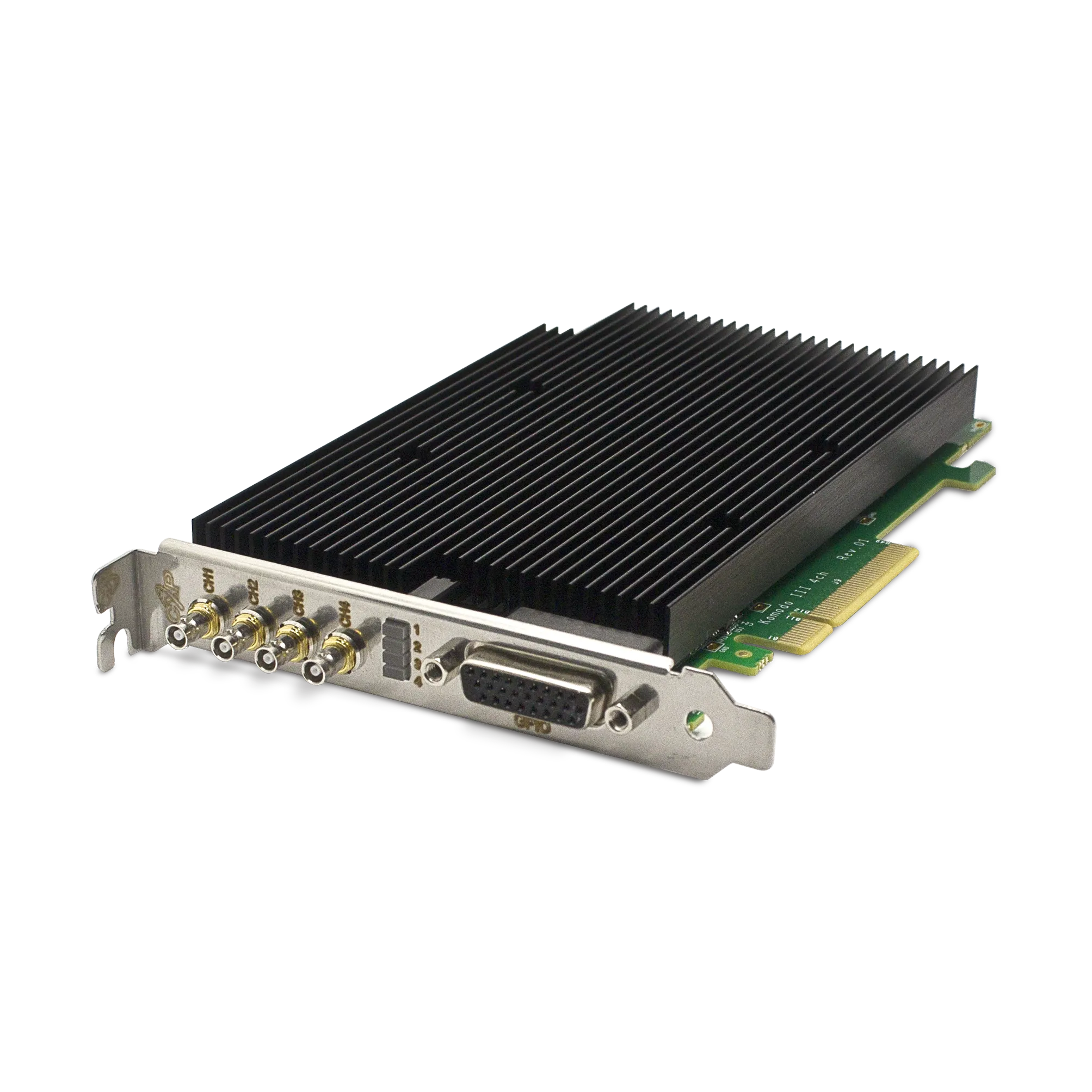
State whether one image stream is distributed over several physical links or several devices each provide an independent stream. Record the supported receiver configuration and link order. The same number of connectors can serve different acquisition arrangements, so connector count alone is an incomplete selection criterion.
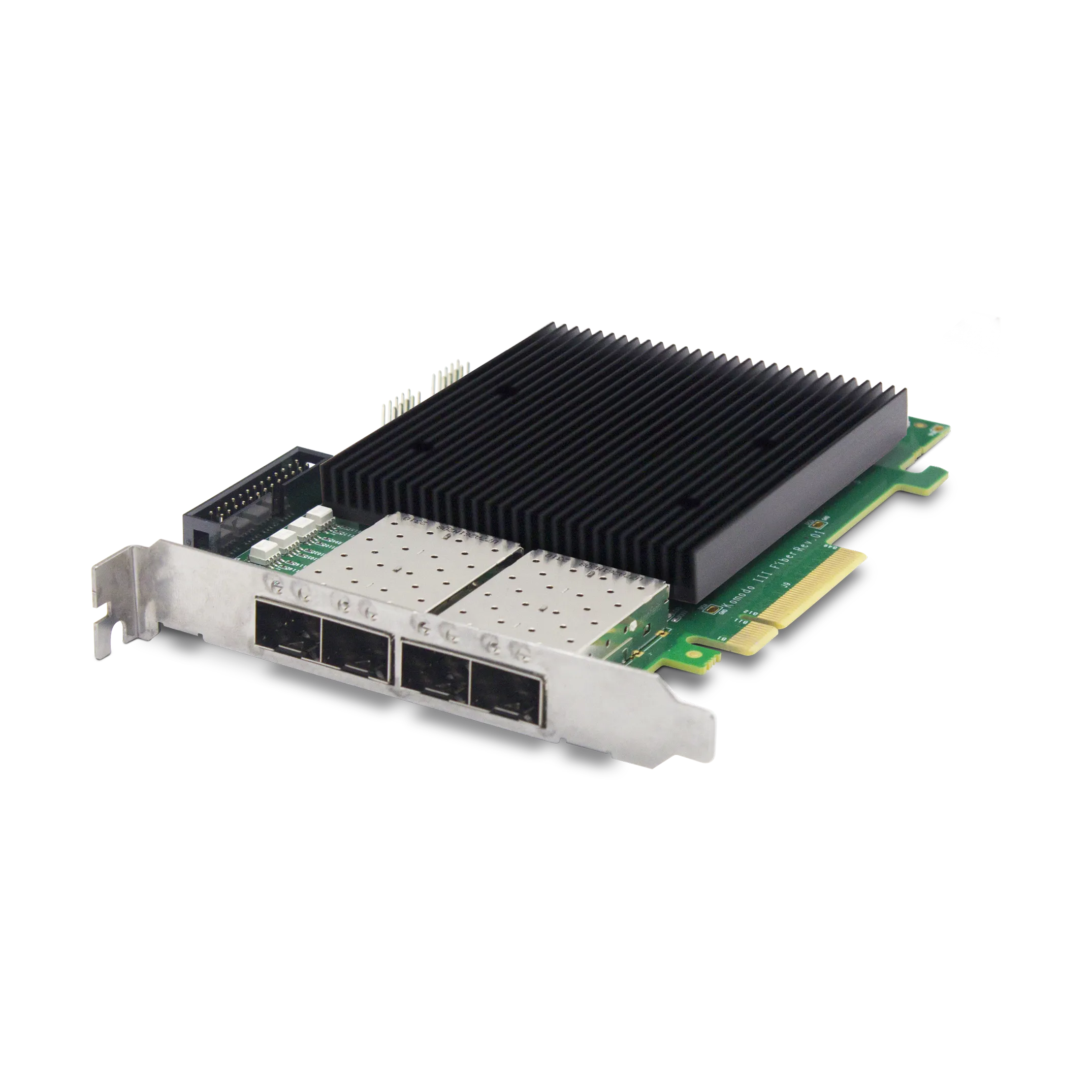
For fiber paths, also check the protocol and optical compatibility. The CoaXPress over Fiber checklist covers the transmitter, modules, fiber and receiver as one link design.
Choose the pixel representation at each boundary
Write down the format on the wire, at the receiver output and in the processing application. Packing, unpacking and color conversion can change the number of bytes without changing image dimensions. Confirm padding and metadata requirements before allocating buffers.
Use the PCIe bandwidth calculation for numerical sizing. Keep this calculation attached to the configuration: a later change from packed samples to a wider host container can invalidate the original throughput assumptions.
Size buffering for a bounded interruption
A useful first estimate is buffer capacity divided by the incoming byte rate. For example, a hypothetical 1 GB of usable buffering at 2 GB/s represents 0.5 seconds of arrivals while the downstream path stops completely. Real usable capacity and flow-control behavior depend on the hardware and software arrangement.
This estimate does not make a persistently slow consumer sustainable. If processing cannot match the long-term input rate, the backlog eventually exhausts any finite buffer. Establish an explicit policy for backpressure, a controlled acquisition pause or deliberate frame selection where the application permits it.
Define processing handoff and recovery
- Transfer ownership of a completed image to the consumer without reusing its memory prematurely.
- Keep acquisition callbacks short and record the time spent waiting in queues.
- Require a completion signal before an asynchronous GPU or storage consumer releases the buffer.
- Report incomplete images and sequence gaps to the application.
- Test how acquisition restarts after a controlled stop and how stale buffers are handled.
The GPU transfer guide explains memory-path distinctions, while the GenTL checklist covers producer discovery and buffer interpretation.
Accept the complete pipeline
Test the intended input pattern, simultaneous streams, processing workload and recording destination. Record delivered image counts, error counters, queue depth and end-to-end latency. Repeat with warmed-up equipment and the final host configuration.
Ask KAYA Instruments to review the receiver architecture with the stream map, image formats and processing deadline. Compare the relevant frame-grabber options and use the article hub for supporting integration guides.